
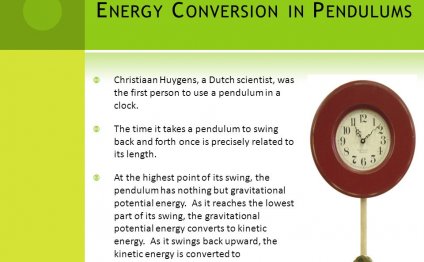
Pendulum in a clock
When you need a pendulum for a clock, the first thing is to look at the back plate of the clock movement for the numbers stamped into it.
There should be, in most cases, an indication of how long the pendulum should be to keep approximate time, if it is a German made movement. Providing it’s of German origin, it will usually have a CM length or a PL length. CM stands for centimeters and PL stands for pendulum length. Usually the Germans measure this length from the top of the clock movement, and this includes the three components of the pendulum all in one length in centimeters. This length will include the pendulum itself, the leader that it hooks to, and the suspension spring on the top that the leader hooks on to, all in one CM measurement.
When the movement does not give any indication of the pendulum length on the back plate, it is possible, sometimes, to convert the numbers. Modern (post 1960) Seth Thomas or Mason and Sullivan are examples of two companies who did not include the pendulum length as a stamp on the back plate when using their numbering system. Neither of these companies, in modern times, made any of their movements. Instead, they purchased a large quantity of movements from another company and were allowed to use their own number system on the back plate. This is why there is no indication of the pendulum length. In these instances, we can convert their numbering system to the real manufacturer's numbers which would include the pendulum length.
If the movement has no numbers on the back plate at all, or if there is no known conversion, the best style of pendulum that you can get is a wood stick pendulum. This is the only style of pendulum that can be easily modified. These types of clocks are usually antiques, or of Asian origin, and information such as pendulum length is just simply not available. In this case, the only thing to do is make an educated guess on where the manufacturer intended to have the bob swing back and forth and create a pendulum to that measurement.
To do this, measure from the bottom of where your imaginary pendulum bob would be in the case up to the leader that the pendulum is to hang on. Take this measurement and add approximately an inch or two. This will give you the longest possible length that the pendulum would be in the clock. So now with the longest possible length known, get a wood stick in the length you just measured, as well as a top hook that looks like it will attach, or be modified to attach, to the leader.
Also, from that same link, you can purchase a new bob, if you need one. To get the proper bob size, measure the inside width of your clock case and subtract 4 inches from that measurement. That measurement would be the largest bob size that you could order without worrying about the bob hitting the sides of the case. If you want to go smaller than that measurement, then that is fine too.
Once you receive your new pendulum components, you can now put it together, install it, and see how the clock runs. Remember, the pendulum is going to be at its longest possible length. The longer the pendulum, the slower the time will be. If the clock is running too slow, even after adjusting the bob, you can shorten the stick until the clock is close to keeping the correct time. Start off by shortening the wood stick by an inch and a half, put all of the components back on the pendulum and see how the clock runs with the new adjustment. If it is still too slow, remove the components again and cut off a half of an inch or an inch. This is the procedure to follow until you get the pendulum to the correct length so that the clock keeps the correct time.
RELATED VIDEO

RELATED FACTS
-
 A pendulum is a weight suspended from a pivot so that it can swing freely. When a pendulum is displaced sideways from its resting equilibrium position, it is subject to a restoring force due to gravity that will accelerate it back toward the equilibrium position...
Share this Post
Related posts

Rolex Oyster Perpetual Superlative Chronometer Cosmograph
Ref. 16519, White Gold Cosmograph Daytona Rolex, “Oyster Perpetual, Superlative Chronometer, Officially Certified, Cosmograph…
Read More
Time Keeping devices
If youve ever been to Rome, or seen pictures of this magnificent city, then youll have seen one of the many obelisks that…
Read Morelatest post
-
 Interesting October 4, 2022
 -
 We are supported October 4, 2022
 -
 Useful October 4, 2022
 -
 Sources October 4, 2022
 -
 Our partners September 12, 2022
 -
 Resources September 6, 2022
 -
 How to make a water alarm clock? September 6, 2022
 -
 Mauthe clock History September 6, 2022
 -
 Top 10 Watches Men September 4, 2022