

Different types of clocks
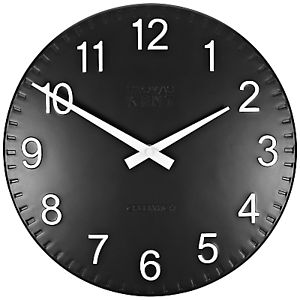 Clocks have been around for a long time, ever since ancient man started seeking a way to measure time. Sundials are considered to be the first clocks, and the earliest of these are estimated to be from Egypt, as far back as 4, 000 years ago. These, and other primitive time-telling devices, paved the way for today's modern clocks. Today, there are many types of clocks in the world, with various methods of measuring and telling time. This guide talks about these different types of clocks and what makes each one unique.
How Modern Clocks Work
Before modern mechanical clocks, people pretty much used whatever they had around to mark the passage of time. They used the sun, moon, and stars. They also used candles, water clocks, incense sticks, as well as sand to make hourglasses. Later on, there were astronomical clocks, spring-driven clocks, and weight-driven clocks. However, these methods were not only inaccurate, they were often difficult to use. Most of them didn't even tell the time, but rather marked the passage of time, usually with bells. The problem with old clocks is that they only used continuous processes (like the movement of the sun). It wasn't until oscillatory processes (such as the movement of a pendulum or vibrations) were used in clocks that it was possible for them to be more accurate.
Modern clocks pretty much work in the same way. They need three basic parts, namely, a power source, a timebase, and a display. A power source, as the name implies, keeps the clock moving, whether it's a spring in mechanical clocks or a battery in electronic clocks. A timebase is also known as the oscillator. The timebase needs to move continuously at a steady frequency. This keeps the accuracy of the clock, ensuring it measures seconds, minutes, and hours the same way all the time. A quartz crystal and a pendulum are examples of common timebases. Finally, a clock needs a display, with which the reader can interpret time.
Classifying Clocks
Timekeeping is such a complex subject that its study has its own name. Horology is the study of measuring time, and the instruments used for timekeeping (clocks, chronometers, timers, etc.) are just one part of this entire body of knowledge. Clocks are classified in different ways, but commonly, they are classified according to their display or mechanism.
Types of Clocks According to Display
The first way clocks can be classified is according to how they display time to the reader, or the display type.
Analog
Perhaps the type of clock most people are familiar with are analog clocks. They use a clock face with numbers and hands to tell the time. The hands move around the clock face, indicating the hours and minutes. Aside from the popular 12-hour format, analogue clocks can come in the 24-hour format, which is used to tell military time.
Digital
Digital clocks are also a popular type of clock display today. These clocks use two sets of numbers, separated by a colon to indicate the hour and minute. The time is projected using a display technology such as LCD or LED. Early digital clocks had hard small plastic cards that would flip to the next number as time progressed. Most digital clocks are set for a 12-hour format, but some do come in a 24-hour format.
Talking Clocks
Talking clocks can also be used by people with low vision, but are often used in telecommunications and public spaces (such as airports or train stations). These clocks are also popular for entertainment purposes. For example, there are various novelty clocks in the shape of various movie and TV characters.
Types of Clocks According to Collectibility
Clocks are quite popular today, for both collecting and home decorating purposes. There are many types of collectible clocks, but the most common types are longcase clocks, mantel clocks, cuckoo clocks, and lantern clocks.
Longcase Clocks
These clocks are also popularly known as grandfather, grandmother, or granddaughter clocks. Grandfather clocks are six feet long or more in size, while grandmother clocks are between five and six feet long. Anything below five feet is considered to be a granddaughter clock. These clocks use enclosed pendulums and three weights on chains. They also signal the hour by ringing chimes, striking bells, or playing a tune. The most valuable antique longcase clocks are those made by William Dutton, John Knibb, Thomas Mudge, and Thomas Thompion.
RELATED VIDEO



Share this Post
Related posts
Pictures of different types of clocks
Clocks have been around in various forms for a very long time, but even well-versed historians have difficulty in agreeing…
Read More
Different Types of time
Copyright © Michael Richmond. This work is licensed under a Creative Commons License. Our clocks and watches are set to civil…
Read Morelatest post
-
 Interesting October 4, 2022
 -
 We are supported October 4, 2022
 -
 Useful October 4, 2022
 -
 Sources October 4, 2022
 -
 Our partners September 12, 2022
 -
 Resources September 6, 2022
 -
 How to make a water alarm clock? September 6, 2022
 -
 Mauthe clock History September 6, 2022
 -
 Top 10 Watches Men September 4, 2022