
How Do Digital Clocks Work?
- A source of power to run the clock In a pendulum clock, the weights or the springs handle this role.
- An accurate timebase that acts as the clock's heartbeat In a pendulum clock, the pendulum and escapement handle this role.
- A way to gear down the timebase to extract different components of time (hours, minutes, seconds) In a pendulum clock, gears serve this role.
- A way to display the time In a pendulum clock, the hands and face serve this role.
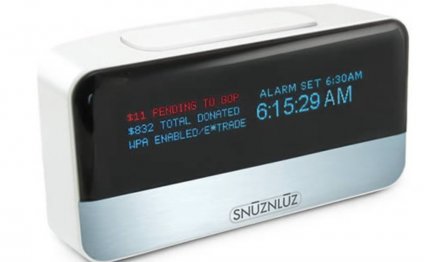
A digital clock is no different. It simply handles these functions electronically rather than mechanically. So in a digital clock, there is an electrical power supply (either a battery or 120-volt AC power from the wall). There is an electronic timebase that "ticks" at some known and accurate rate. There is an electronic "gearing mechanism" of some sort - generally a digital clock handles gearing with a component called a "counter." And there is a display, usually either LEDs (light emitting diodes) or an LCD (liquid crystal display).
RELATED VIDEO



RELATED FACTS
-
 The Basics ( /ˈbæzɪtʃ/ BAZZ-ich) are a three-piece band from Melbourne, Australia, formed by Wally De Backer and Kris Schroeder in 2002. Their style has been described as anything from 'indie-pop' to 'rock'n'roll' to 'pop-rock', though their records show they span a...
Share this Post
Related posts
How digital Clocks Work
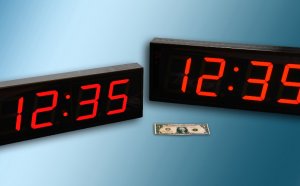
For any clock to work, it requires an oscillator. For a digital clock, this is generally provided by a crystal. The crystal…
Read More
Work Clocks
Simple punch-in/punch-out clock & widget for tracking the time at work. Features (very partial list): * Overtime…
Read Morelatest post
-
 Interesting October 4, 2022
 -
 We are supported October 4, 2022
 -
 Useful October 4, 2022
 -
 Sources October 4, 2022
 -
 Our partners September 12, 2022
 -
 Resources September 6, 2022
 -
 How to make a water alarm clock? September 6, 2022
 -
 Mauthe clock History September 6, 2022
 -
 Top 10 Watches Men September 4, 2022